Friday, September 08, 2006

Tuesday, September 05, 2006
Shameless
Costs of owning a 1.6 litre car in Singapore is approximately $1000/month...
Fixed Costs
Date Amount Remarks
26/03/2006 54300 Car price
26/03/2006 1359 Insurance
26/03/2006 765 Transfer fee
17/08/2006 488.5 Road tax
Price of car per month 502.7777778
Insurance per month 113.25
Transfer fee per month 7.083333333
Road tax per month 81.41666667
Fixed costs per month 704.5277778
Running Costs
March/April
Date Amount Remarks
27/03/2006 20 Cashcard
27/03/2006 20 Parking coupons
28/03/2006 71.73 Petrol
04/04/2006 299.75 Servicing
09/04/2006 47.43 Petrol
23/04/2006 58.96 Petrol
517.87 Total
May
Date Amount Remarks
13/05/2006 70.9 Petrol
26/05/2006 20 Cashcard
90.9 Total
June
Date Amount Remarks
17/06/2006 63.02 Petrol
17/06/2006 71.69 Petrol
17/06/2006 20 Cashcard
29/06/2006 73.37 Petrol
228.08 Total
July
Date Amount Remarks
08/07/2006 150 fine
08/07/2006 67.79 Petrol
08/07/2006 20 Parking coupons
27/07/2006 6 fine
21/07/2006 74.9 Petrol
318.69 Total
August
Date Amount Remarks
19/08/2006 25.8 petrol
25/08/2006 73.93 petrol
99.73 Total
Average running costs for 5 months is approximately $251. Add $705 fixed costs and you get around $956 per month. No shit!
Implications
- It is probably advisable to get a car smaller than 1.6 litre (for better fuel economy) if you are earning less than $4000 per month (going by a general rule of thumb that expenditure on car should not exceed 1/4 of your income...)
- You would need to earn above $3500 to have a car to be comfortable (I feel...)
- Fines are not worth it!!!
- Parking in SAF camps is free, can you imagine if you had to pay $300 per month for season parking in CBD? I hope schools don't implement cashcard parking =S
- Touchwood but there are also no repair costs in case of accidents factored in yet...
But yet one can't deny the convenience of having your own set of wheels. Without my wife,
- I would have needed to wake up at 530am everyday to get to Boon Lay (or even stay in) during my course.
- I would have needed to carry the stack of 20+ books out of Pasir Laba camp to take a cab for my course.
- I would have needed to carry the air weapon papaer and pellets on public transport for every training.
- I would have to depend on the goodwill of others to fetch me to and fro my house if there was an outing at night...
- I would have needed to transport the speakers for Air weapon competition in a cab, AND thereafter go to CMPB to collect the trophies for the same competition. How to make the uncle wait or to put the speakers at a safe place while I go collect the trophies?
All the above might sound like excuses, but after commissioning, I am expected to be much more independent, and to do a lot more things (i.e. run around Singapore more) and having a car really really helps. And one can't deny the fact that as you get older, the timings of outings also get later and later, meaning you either take cab or drive...
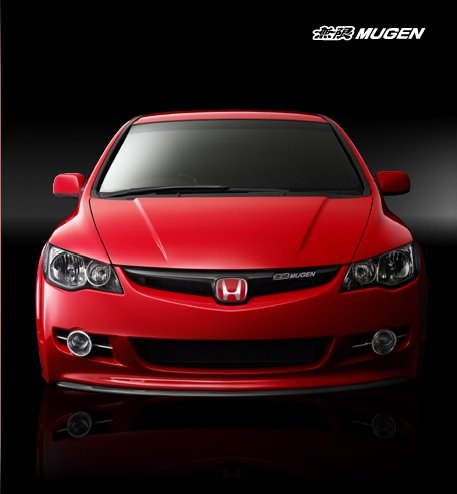
And so there goes my dream of owning a Honda Integra or even a Honda Civic, which woulld double the fixed costs of the car. Hopefully, I won't get sacked in future so that I can comfortably afford a Honda Fit (1.3 litre) (and no Cherry QQ thank you very much) in future.
But you know what's the worst thing? It's that you feel utterly ashamed of yourself because you are so lucky to even to be able to think about a car, while others around you got to grapple with much bigger problems. Stuff like rents and utilities to think about, or even the possibility of going blind, and having everything taken away from them if they go blind...
Shihua Shihua, you are a very lucky boy... Don't always complain that you have no girlfriend, at least you have *stop reading here if you are female AND sensitive* 5 best friends and FHM =P
Monday, August 28, 2006
Sunday, July 30, 2006
Saturday, July 29, 2006
Where's the 25 million pounds transfer fee a season?
Manchester United: Glazers turn transition into decline
The Glazer family has owned Manchester United for around fourteen months now, and finally the reality of that purchase is starting to be felt by even the most optimistic of the 'wait-and-see' fans. The majority of match going fans were concerned about the purchase but somewhat reassured by the business-as-usual stance at the club. The management team largely remained and Sir Bobby Charlton urged people to be guided by results and not emotion.
2005/6 was a mixed season - with a good league finish of second (Chelsea were always going to win it last season), and a League Cup win balanced by an early Champions' League exit and an insipid FA Cup exit at Anfield. This was probably around the level that was expected for a team that had ceded its right to be considered the best in the land and was deep (if not lost) in transition.
But 2006/7 is barely three weeks away and transition is now being replaced by decline.
As we approach the end of the third transfer window of the Glazer reign, it is clear that the club is being squeezed so hard that decline is now inevitable.
Firstly the Glazers have dumped much of their personal debt arising from the takeover onto the club, the rearrangement of the finances last week rolled ?63m interest into the debt - but cunningly - the same amount was additionally secured against the football club. In simple terms all the interest that was piling up on the Glazers has simply been pushed onto the club. Anyone with the glib argument of 'why would they sink so much of their own money into the club only to run it into the ground' needn't bother repeating it, it won't be long before the Glazers will have no financial risk attached to this deal.
Secondly as a result of annual interest payments now reduced to, reportedly, 'just' ?42m per season the squad cost cutting is rampant. As many reserves as possible are being farmed out on loan, and fringe players are being sold or released. There are fewer professionals at Old Trafford than there have been for the length of Sir Alex Ferguson's stewardship. Increasingly Ferguson is being forced to draw the wagons around his first team squad and (very much like the dog-days of Ron Atkinson) to hell with the rest.
Revenues have been driven remorselessly up with a few million extra from sponsorship, plenty more from TV - and a big increase in ticket prices (up 25% in two seasons), so the cost cutting is a policy not a reaction to falling revenues.
The cost cutting and penny-pinching is indicative of a structure that is short of cash. I've always believed that The Glazers bought the club with the intention of selling it within three years for a big profit - and the abject transfer market dealings this summer simply support this theory.
With Liverpool spending ?20m and Chelsea another ?50m, Manchester United have actually become nett sellers. A team that so obviously needs two high quality central midfielders has spent the summer not buying anyone. To my knowledge only one bid has been made all summer - around ?10m for Michael Carrick - with United spending more energy in trying to flog Ruud van Nistelrooy than in trying to buy in anyone. It certainly seems that the orders from on high are 'sell-before-you-can-buy' - hardly what you expect from a billionaire and his boys, and not a policy designed to improve the club.
United stand on the cusp of the season likely to lose their serial top scorer - without replacing him - and without a midfield to dominate anyone but the relegation candidates. Looking dispassionately at the midfield only Ronaldo is international or world class - the rest are solid Premiership quality players, but hardly world beating. Chelsea can choose from Essien, Makelele, Robben, Lampard, Ballack, Wright-Phillips, Mikel and Cole - any three of which could stroll into the United midfield.
Last summer two small purchases (van der Sar, Park) were offset by similar sales (Neville, Kleberson); in January the gaping defensive holes were iffily plugged with Vidic and Evra costing around ?12m.
This summer the sales of Mikel, Spector and probably van Nistelrooy, balanced by the probable purchase of Carrick, will leave United with a nett transfer budget of nothing since the arrival of the Glazers. At a time when United need completely rebuild the midfield, Ferguson is expected to fund it from sales. Can anyone seriously expect Ferguson to compete with Chelsea or Liverpool on that basis?
Most Premiership clubs spend millions and even tens of millions oper season (Chelsea are an exception); while United stroll everyone else is sprinting - extrapolate this for a couple of seasons and Manchester United will be in mid-table.
The number of United fans who believed in some mythical ?25m annual transfer budget must now be falling daily. The reality is that United are being run at about break even in their transfer dealings regardless of the need. This would explain the reason that Ferguson is refusing to countenance Ronaldo leaving. Despite the winger's obvious difficulties with English football, Ferguson knows that he will probably not be allowed to use the proceeds of a sale to replace him.
Next summer when ticket prices go up ?100 for the third season running, with a team in decline and every penny from a support that is being soaked remorselessy going to pay off debt hoisted on to the club by their 'owners' everyone can draw their own conclusions. A club that was self-reliant, debt-free and funded by its fan-base two years ago is now a debt-driven monster.
As Ferguson's hands are tied in the transfer market it may be unfair, but expect the 'Fergie out' chants to start ringing round the stadium as soon as he has celebrated twenty years in charge - with the nasty songs about the Glazers expected to be resumed somewhat sooner.
Antony Melvin
26 July 2006
The Day a legend left...
http://soccernet.espn.go.com/news/story?id=374600&cc=5739
Ruud blames 'painful' Man Utd exit on Ferguson
Ruud van Nistelrooy believes the breakdown of his relationship with Sir Alex Ferguson prompted his exit from Manchester United.
The Holland striker, 30, joined Real Madrid on Friday after five years at Old Trafford in which he became the club's greatest European goalscorer.
And he admitted his exit had been 'painful'.
'The relationship with the manager had ended and this was painful for me because I owe him a lot,' said Van Nistelrooy, whose move to United from PSV Eindhoven was delayed for 12 months in 2000 when he suffered a serious injury.
'He waited for me during my injury and allowed me to play at the highest level.
'I didn't get a chance to say goodbye to the manager yesterday because when I left the training ground in Manchester yesterday afternoon the deal had not yet been completed but I'm sure I'll meet him again.'
The striker was quick to thank the United fans and club for their support during the previous five years.
'My affection for the fans and club is total. Manchester United will always be a part of me,' said the striker.
Van Nistelrooy was presented to the Real fans only moments after signing his three-year contract with the club after a whirlwind 24 hours which had seen him take part in both of United's two training sessions yesterday.
But the 30-year-old was clearly relishing the challenge and was looking forward to the chance of being reunited with his former United team-mate David Beckham.
'It will be great to play with David again,' said Van Nistelrooy.
'I4ve really missed him because he's both a wonderful person and a great player'
Van Nistelrooy is a key element in the plans of Ramon Calderon, the new Real Madrid president, to create a competitive team following the club's three-year period without silverware.
'Van Nistelrooy was a key target for us during the election campaign. He's an important player, with great presence in a team, and scores lots of goals,' said Real's new manager, Fabio Capello.
But - with a squad including the likes of Ronaldo, Raul, Antonio Cassano and Robinho - Van Nistelrooy does not necessarily have a guaranteed place in the starting line-up.
'Ronaldo and Van Nistelrooy may be able to play together, but we'll have to see if that works. We'll have to decide but it depends on a lot of things,' stated the Italian coach.
And competition for a place in the new Real Madrid team may yet become tougher if the president's election promise to bring in AC Milan star Kaka becomes a reality.
As the Dutchman completed his brief sortie on to the Bernabeu pitch to meet the two thousand fans which had gathered to greet him, a chorus of chants of 'where is Kaka' erupted from the stands.
Asked about the incident at the press conference, the striker was unfazed, saying: 'Any team or player would welcome a player like Kaka.'
The Dutchman described coming to Real Madrid as a 'dream come true' but the striker and his team-mates will clearly need to perform at the highest level if they are to overcome the current Primera Liga and European champions, Barcelona, and avoid the dream turning into another nightmare for Real fans.
Sunday, July 16, 2006
Sunday, July 09, 2006
World Cup is boring
But even with the carnival atmosphere, I am also consciously aware of the fact that a large part of it is fabricated. It's false, it's not the real deal. And that is why I cringe whenever I happen to watch the Chinese soccer programs on CCTV. Topics covered range from choosing the best looking 11 players (there was even a competition for people to guess which 3 players had been chosen as the bestl ooking forwards!) to having French and Portuguese "die-hard" fans debating with each other. FOR FUCKS SAKE YOU ARE CHINESE SUPPORT YOUR GOD DAMN CHINESE NATIONAL TEAM CAN?
Certainly there are some who feel deeply about their national team, but there are even more who are there for the ride, just to be IN. Hey I am cool, I watch the World Cup. Is that passion? Hardly I think. Passion is when you still pay 30 quid, in the cold wintry conditions of January, and travel God knows how many hundred miles to Teeside to watch your crap team draw 0-0 with Middlesbrough. To me, the success that comes after an entire season, 10 months worth of joy and pain, is so much sweeter than that which merely comes after 7 matches. Give me the Premier League and Champions League any day.
And there is the Singaporean in me too. I just can't find a team that I can hands on heart say that I support. In the beginning I had predicted Portugal to go all the way, and so I sorta supported them. But hey, I liked Holland too, and so I was quite LPPL when the two teams met. Even worse was to come when I supproted Portugal before Rooney got sent off and England after that. All this is too LPPL for me. You should only support one team! That's the way it is. And that one team can only ever be Singapore...
And no thanks to Starhub too. In 98 it was free to air, in 02 you had to subscribe to Starhub. All that is fine, but now you have to pay additional even though you are an existing customer. I say screw you Starhub. Pay per view is an evil that should never be allowed to enter Singapore shores. Even though going to other places to watch, buying antenna to receive Indonesia channel ultimately cost more than your 15 bucks price, I much rather do it than to give that 15 bucks to you. FUCK YOU for introducing pay per view. To other football fans, I say: beware of this evil phenomenon.
On another note...
You TosH are charged that you on XX June 2006 at about 4.27pm along XXXXXX Ave S'pore did drive a motor vehicle no. SFS XXXXX at a speed of 95kmph, such speed bring in excess of the imposed speed limit of 70kmph of the road and you have thereby committed an offence under section 63(4) and punishable under section 131(2) of the Road Traffic Act, Chapter 276.
Crap, and that means 6 points left and $150 gone.... Sigh. Gotta walk on a tight rope for the next 9 months. And it happened coz I was eager to go back TO CAMP to finish my work. So much for being enthu about work. So if you happen to sit in my car, please pardon me for being niao and asking you to buckle your seat belt (you need it when I am driving...serious..). If not don't blame me for scolding the shit out of you.
Next week marks the start of the xiong course that I have to go for. Somehow I am just not eager to learn. at least back in school I could understand all the shit even if i wasn't aprticularly interested...Physics for example. But this SAF shit is really not my cup of tea. I can't understand, nor am I arsed enough to make an effort to understand them. I just don't wanna have anything to do with operations... period. Sigh, it's gonna be a long 6 weeks. May post- ATEC period come soon.
If you had read until this point, you would have noticed that my Ingerlish have negatively improved to perhaps pre school level. Alas, what happened to me in NS? Sigh.
But all is not negative though. The course has actually introduced me to this really cool program CMAP. Go to
http://cmap.ihmc.us/
to download it. It's FREE! It's kind of like a mind mapping program but it gives you the additional tool of putting in linking phrases between the different concepts so that others can understand your mind map. And they thus call this a concept map instead of a mind map. Doesn't matter to me, all that I know is that this program is fucking cool lah. I never liked mind maps, not because I don't like the concept per se, but that making mind maps by hand is a pain in the ass. You need to have a basic idea of how it's going to look like in the beginning, even when you are organising your thoughts, if not it's gonna be damn messy. How many times have you started out on mind maps before realising you had run out of space in one corner of the paper while the rest of the paper is empty?
But now with CMAP, fret not! You can shift everything around and fit everything nicely after you have typed out everything. Seriously, if I had this program like erm since JC, I would have learnt so much better. And to all you MOE people out there, this thing is being introduced to trainees in NIE, so don't say I never tell you! haha. I am going to learn to be so expert at this program and go and xian the xiao mei mei in NIE next time. Sounds like a plan eh? =)
Monday, June 19, 2006
Monday, June 12, 2006
Rooney please get out if you have not fully recovered
"That this House condemns the shenanigans of Sir Alex Ferguson, the Manchester United Manager, and his continuing efforts to prevent Wayne Rooney from playing for England in the World Cup; and calls on the Prime Minister to use his long-standing friendship with Sir Alex to lobby for Rooney's inclusion at the appropriate time."
Fuck me!! Is he too free? I am quite sure there are some stabbing chavs, hungry poor or terrorised Iraqis in need of help instead of him poking his dickhead into something he does not have a clue about. You want to rush Rooney back? Flashback to Ronaldo in the 98 final against France you clueless muppet. And while you are at it, read the article below...
http://www.mirror.co.uk/sport/readeonsport/
UNITED FANS FEAR ROO HELL
THE amount of stick levelled at Manchester United over their determination to keep Wayne Rooney away from Germany has proved one thing.
World Cups are to real football fans what Christmases are to regular pub-goers. A pain in the backside. A time when your enjoyment is spoiled by blissfully-ignorant, giddy light weights who get cringe fully drunk on atmosphere before heading back to normality when last orders are called.
Of course United don't want him to go. If he played for your team, would you?
What an unmissable target that susceptible foot is going to be to opposing defenders if he's rushed back too soon. And if he is crocked again how wide would be the grin be on Jose Mourinho's face?
United fans have every right to want him nowhere near Germany. Especially when many of them don't really care if England win or lose. And one of the reasons they don't care is that they've heard England fans mercilessly barrack their own players like David Beckham and Phil Neville, (just as Liverpool fans have with John Barnes, Steve McManaman and Emile Heskey) and think sod you and your Yeovil flag.
They know once the World Cup is over, fans at every ground will be hurling abuse at Rooney, cheering if he gets injured. That many of the London pundits who want him fit so they can have a thrilling, jingoistic summer, will be slagging him and his missus off for being tasteless Chavs the second the tournament ends.
They know if Rooney plays unfit, has a stinker, loses his rag in frustration and is sent off, he will be Public Enemy Number One.
In short they know it suits the nation to squeeze what it can from Rooney for a month then let him go to hell afterwards.
Who can blame them for wanting to put a bomb under the bandwagon?
Money, chores created friction among flatmates
P.S. Oh and by the way the World Cup group stage sucks. I hate international football (unless I'm there to experience it live). Sigh, would I be somewhere in Germany eating kebabs and sausages now if I had gotten the sponsorship for Masters?
From The Straits Times
LIKE many foreign students, the three Singaporeans were thrown together in Sydney to set up a home away from home.
Despite their very different personalities, in the seven months they stayed together, they generally got along well - until rent, bills, chores and each other's pet peeves started getting in the way.
Now the youngest of the trio, Ram Tiwary, is on trial for killing his flatmates, Mr Tony Tan Poh Chuan, 27, and Mr Tay Chow Lyang, 26, in September 2003. Tiwary was then 24.
From the 16-day hearing in a Sydney court, it was clear the three were the most unlikely of housemates. Mr Tan was studious, neat and tidy, Mr Tay obsessively careful with money, and Tiwary an inveterate socialiser.
Crown Prosecutor Tim Hoyle said there was 'very minimal social contact'. Tiwary did not even know Mr Tan's surname when first questioned by detectives.
It was the Barker Street apartment, with its relatively cheap rent and close proximity to the University of New South Wales, that drew them together. Mr Tay got a room in August 2002, soon after starting his undergraduate studies, followed by Tiwary, then Mr Tan in March 2003.
There was a fourth person in the flat, a Taiwanese student named Mr Vincent Tseng, but his departure in July that year marked the point that relations among the trio took a distinct turn for the worse.
Who pays what?
MR TAY was the only one of the trio paying his own way through university, dipping into the combined savings he kept with his wife, a Chinese teacher.
Tiwary and Mr Tan were both on Singapore Armed Forces (SAF) study awards.
Twice a year, Mr Tay would carefully plan his budget for the next six months. If he overspent, he would get by on biscuits just to balance his books.
The apartment lease was in his name and he was usually the one who settled all the bills.
Every month, 'like clockwork', he would pay the A$2,172 (S$2,585) rent to the landlord, then collect each flatmate's portion and issue a computer-printed receipt with his signature.
He also handled the utility bills, but his insistence on dividing the bills equally was a sore point, especially with Mr Tan, who communicated with his wife over the Internet and hardly used the house phone.
But Mr Tay was so particular that he even inserted a clause in the lease listing 'toilet paper expenses' as an item every flatmate was obliged to chip in for.
This meticulous financial husbandry grated on Tiwary too, according to the prosecution. They say Tiwary, now 27, killed Mr Tay because he kept pressing him for the A$5,045 he owed in rent.
When police combed through the trio's finances, they found Tiwary broke, with a negative 84 cents in his bank account.
His account trail showed that he made frequent withdrawals - sometimes as much as A$400 at one go. He spent most of it on clothes, model aeroplanes, alcohol and, two days before the murders, A$60 on the baseball bat used to kill at least one of the victims.
He had to work part-time as a security guard to just about keep his head above water and was also accused of a series of thefts.
Mr Tan liked to splurge, too, on hobbies like diving, but never spent beyond his means.
That Mr Tay was tough with money was no secret to his friends, who described him as 'stingy'. One recalled how he threatened to sell off Mr Tseng's belongings because he owed him A$63 in unpaid electricity bills. It was Mr Tay's refusal to let Mr Tseng skip a month's rent when he went on holiday to Europe that made the Taiwanese student leave the flat.
With a fourth person gone, the rent had to be split three ways, with each liable for an extra A$200 a month.
The prosecution said this was why Tiwary cooked up a 'fictional character', Andrew, to stop Mr Tay raising the rent.
But when Andrew never appeared after several months, Mr Tay lost his patience and wanted Tiwary to pay his imaginary friend's share of the rent.
Who cooks and cleans?
MR TAN, who had learnt to cook in Sydney, was the designated chef, leaving Tiwary and Mr Tay to do the washing up.
But his mother, Madam Chiew Lee Hua, said her son got so fed up with the others leaving the dishes unwashed that he refused to cook for them anymore.
From then on, they prepared their own meals or had takeaways. Grocery shopping became an individual affair and fridge items were labelled by each one.
Friends and the widows of the two slain men all said they hardly saw Tiwary in the flat. He was a night bird and a late riser, while the others were usually in bed by midnight and up by 9am.
Mr Tan and Mr Tay tended to spend their time studying. On the rare occasions they left the flat, it was to go to school or to buy essentials. They kept largely to themselves, mixing with only a small group of friends, mainly fellow Singaporeans or Asians.
Tiwary preferred hanging out with students of all nationalities.
The joke among students then was if anyone wanted to look for Tiwary, they would have better luck in pubs than on campus.
Different backgrounds
THE two victims were from typical heartlander families. Both lived in three-room HDB flats, both their fathers are in the construction industry and both their mothers are part-time hawkers.
Both Mr Tan and Mr Tay studied in neighbourhood schools and got to university via the polytechnic route.
In a diary he kept while training to be an army officer, Mr Tan wrote that his motto as a youth was 'All Play and No Study'. Yet, he reversed that motto when older, and graduated with merit from Singapore Polytechnic with a diploma in architectural technology.
He was determined to do well as his parents led a hard life without a proper education, and they hoped to see their children graduate and have good careers. He aimed to reach the rank of Major by 30 and provide for his parents.
Mr Tay was a top student in the same polytechnic, which allowed him to go directly into the third year of the university's electrical engineering course.
Before he died, Mr Tay was working on a thesis on motor movement control, which could help treat people with motor function problems.
Both men were serious about their studies, rarely missed classes and were almost never late.
Mr Tan was doing so well that all his classmates in his telecommunications engineering final-year class knew he would get a first class honours.
He did, posthumously.
Mr Tay was also awarded his degree posthumously.
Tiwary, on the other hand, comes from an educated, middle-class family. He did his primary and secondary education in Brunei, where his father was a vice-principal in St Andrew's School.
He told New South Wales police he felt the pressure to do well in studies and hinted he was trying for a degree as it was 'something my dad would have wanted'.
But Tiwary was notorious for showing up midway through lectures, if at all, and failed several subjects. When asked about the $30,000 in compensation he would have to pay the SAF if he failed, he joked: 'My dad has the money, not me.'
The Barker Street second-storey apartment where the murders took place is now occupied by four Asian students.
Landlord Albert Lichia, 56, who lives in the unit below, said he could not find any students to move in for almost two years after the murders. He said: 'They were nice and friendly people, never caused me any trouble. It's such a horrible thing to happen...for all three of them.'
Sunday, May 28, 2006
Zhng
This must surely be one of the best looking Vios around...
Thursday, May 25, 2006
Hell hath no fury a roof leaked
You know something? As cadets, we can just run off to kbkb to the instructors and you can almost confirm plus chop plus guarantee it will be fixed. Now with the heavy bar on our shoulders, we are expected to settle this kind of stuff by ourselves.
I think I can make it as a telemarketeer if I ever get kicked out of the teaching profession. Over the course of these few weeks I have made calls to random people requesting for this, enquiring about that. Think I have almost eliminated my innate fear of calling people I don't know....
Yeah our boss bringing us on a branch outing tomorrow! Woo hoo! Really do think that I have the best boss among all the PSOs and OCs that I could have been placed under. Just a bit of a shame that my personality doesn't really suit the job scope, but I am not complaining. Life has been pretty good so far...
Anyway just for my records...
From The Straits Times
May 25, 2006
REGULATION OF PAY TV INDUSTRY
MDA should give fuller picture
By Burton Ong
FOR THE STRAITS TIMES
DECISIONS issued by industry regulators responsible for promoting competition in specific sectors of Singapore's economy in response to complaints against dominant market players have never been particularly illuminating.
MDA should give fuller picture
Apart from short press statements outlining the substance of their final decisions, these regulators have not made public complete grounds for their rejection of allegations that market incumbents in the telecommunications and media industries have engaged in anti-competitive behaviour.
Neither have they disclosed the legal analysis which they have employed in each case to arrive at their final decisions, often citing reasons of 'commercial sensitivity', thereby making it difficult for the public to scrutinise the soundness of these decisions.
A recent example of this regulatory obscurity can be found in the Media Development Authority's (MDA) decision to allow the incumbent pay-TV service provider, a monopolist, to continue striking exclusive-content arrangements with cable television channels.
This was in response to a complaint from a potential new market entrant alleging that such practices made it more difficult for it to enter the pay-TV market because it would not have access to popular channels that customers would want to subscribe to.
Under the Media Market Conduct Code (MMCC), which sets out the legal framework for regulating competition in the various segments of the media industry, Paragraph 7.5.6 prohibits 'agreements with providers of Ancillary Media Services which substantially foreclose access to an input, or a channel of distribution, where this would prevent, restrict or distort competition in any Mass Media Services Market'.
Whether or not a foreclosure is 'substantial' or not depends on the percentage of the market foreclosed, the duration of the agreement, whether the agreement has a 'legitimate business purpose' other than foreclosing competitors' access to business inputs, and whether competitors have access to comparable inputs from other suppliers.
Conspicuously absent from this list of considerations is the degree of market dominance possessed by the media service provider engaged in such exclusivity arrangements with providers of these business inputs: A monopolist would be in a much stronger position to lock in upstream suppliers with exclusivity arrangements, and make it more difficult for would-be competitors to gain access to these inputs, compared to a market player with a lesser degree of market power.
Without publishing a full report of its decision, the MDA offered a number of less than convincing reasons for its unpopular decision to allow the incumbent to continue making exclusivity arrangements with various unnamed channels - though speculation has been rife that they include ESPN, the Discovery family of channels and HBO.
Firstly, would-be market entrants were said to be able to secure alternative content (other than these channels) for themselves. Secondly, the duration of these contractual exclusivity arrangements was said to be too short to act as effective barriers to market entry. Thirdly, the scope of these exclusivity arrangements was limited to the cable-TV platform, allowing other operators to gain access to these channels if they utilised other broadcast methods such as the Internet.
It is true that alternative content is available - there are probably hundreds of channels from around the world which other pay-TV operators could have access to, but the real question which needs to be answered is whether these other channels are real substitutes for the 'key content' in respect of which the incumbent has obtained exclusive broadcast rights. No cable-TV subscriber is likely to view a cable channel specialising in non-English arthouse films as a substitute for blockbuster-driven HBO. Neither is a cable channel focused on US college football and baseball games going to be treated as an effective substitute for ESPN.
An even more fundamental question appears to have been glossed over: Before determining whether or not the exclusivity arrangement substantially forecloses the market, how is the relevant market defined to begin with?
There are at least two possible markets which ought to have been investigated - those pay-TV customers who sign up primarily for single channels, and those who sign up for a suite of channels. Even though the incumbent pay-TV operator is a monopolist in both these markets, the substantiality of the foreclosure effects may differ in each case and warrant a more finely tuned response from the competition regulator.
Even if the duration of the exclusivity arrangements is viewed as relatively short, such that potential competitors have a theoretical opportunity to gain access to these channels when they expire, the reality is that the incumbent will have an enormous advantage when renewing their exclusive content with these channels because of its monopolist status and existing subscriber list, which comprises 40 per cent of all households in Singapore.
Exclusivity arrangements involving highly sought-after channels invariably require the pay-TV operator to fork out a premium which will almost always find its way, ultimately, into the cable-TV viewer's subscription bill.
Finally, the fact that newcomers may gain access to these channels by broadcasting them via the Internet or other new technologies does not mean very much if these emerging high-tech content distribution channels are not even in the same market as the established cable-TV market. The picture quality, stability and other product characteristics of the former may not be comparable to those possessed by the latter. The former is likely to have niche appeal only to technologically savvy individuals and not to average television viewers. If these two modes of content delivery are in separate and distinct markets, the emergence of the former does not in any way detract from the anti-competitiveness of exclusivity arrangements being practised in the latter.
In reaching its conclusion that exclusive content agreements in themselves will not prevent new entrants from entering the pay-TV market, but without releasing a full report on how it analysed the issues arising from its interpretation of Paragraph 7.5.6 of the MMCC, the MDA's decision is difficult to justify to the 453,000 cable-TV subscribers in Singapore.
As with some of its earlier decisions in relation to other sectors of the media industry, a shroud of mystery - and cynicism - will envelop this episode until the regulator changes its disclosure policies.
In the meantime, existing cable-TV customers will continue to be deprived of the alternative packages and pricing plans which the would-be competitor may have offered if it had entered the pay-TV market, while potential cable-TV customers unwilling to pay the high subscription fees currently charged by the incumbent monopolist will continue to remain on the sidelines.
The writer is a member of the law faculty at the National University of Singapore.
----------------------------------------------------------------
From The Straits Times
Singapore politics, from an economist's viewpoint
I REFER to the letter, 'Is politics all about pursuit of party interests?' by Mr Jason Phan Shiaw Hwa (ST, May 16). Mr Phan raised a long-debated issue: 'Is politics ultimately about the pursuit of party interests, with the interests of citizens being incidental?'
In the study of political science, it is generally assumed that formation of policies rests in the hands of elected officials and their appointees, and that these officials form policies to maximise votes and thus remain in office. The result is a bias in the political system towards non-political parties that have strong lobbying power.
As an economist, I have to agree with the above generic assumption to a large extent. History has proven so, and many conspiracy theories have since evolved, about how countries' ruling parties manipulated the economy to gain favour with the electorate. Empirical evidence has also demonstrated that the economic cycle has a strong correlation with the political business cycle. Governments can manipulate the economic cycle by engineering booms and recessions with the use of fiscal and monetary policies to seek favour with the electorate. That is why in many countries, it is not unusual to observe the political business cycle where rapid growth precedes elections, and recessions follow elections. In this way, through tactful economic management, the government can make the economy look good at the time of election.
However, in Singapore, this is not the case. Although critics claim Singapore is a de facto one-party state, to a large extent this has allowed the Government to prioritise long-term growth rather than be concerned with short-term economic boom to win elections. It is always easier and more convenient to manipulate myopic short-term growth using fiscal and monetary tools.
However, in Singapore, the Government practises prudence and adopts supply-side policies such as education, training, investment and economic infrastructure development. This is to increase productive capacity to ensure there is sustainable economic growth. We are always looking out for niche areas to develop in as well, as shown by the number of 'hubs' we are trying to establish, such as 'IT hub', 'life science hub' and 'education hub', so we can always stay ahead in the face of global competition.
That is why I believe the Government truly subscribes to Minister Mentor Lee Kuan Yew's principle that politics is 'not a business of just voting, or not voting. Politics has got to do with your life, your job, your home, your Medicare, your children's future'. This is possible because, in Prime Minister Lee Hsien Loong's words, 'Singapore succeeded because it had a dominant PAP government which could think long term and run the country without being distracted by the opposition'.
In fact, our unique tripartite system, where there are strong ties between labour, management and the Government, is a key element of Singapore's success and an envy of many countries, but their governments cannot simply replicate it due to strong political competition there.
The flexi-wage system also defies the common economic notion that 'wages are rigid downwards', as we allow wages to be pegged to performance. Thus in times of recession, wages can be adjusted downwards without much resistance from the labour force, unlike many other developed countries with strong trade union presence. This helps to keep the economy competitive.
Although I was born post-independence, when Singapore experienced rapid economic growth under then prime minister Lee Kuan Yew and his administration, I have never doubted Singapore's imperative need for political and internal stability, especially in a country which lacks natural resources such as land, water and petroleum and practises multiracialism.
As a small and open economy, we are highly susceptible to external shocks, as evidenced by the Asian financial crisis, 9/11 terror attacks, Sars, and more recently, the world-wide bird flu epidemic. Nonetheless, our strong and capable Government has time and time again steered us through these turbulent times, with speedy economic recovery. In fact, the World Trade Organisation praised us recently for our swift response to the Sars crisis, which allowed the global epidemic to be resolved in a relatively short time.
On the other hand, proponents of the opposition have called for more alternative voices in Parliament to keep a check on the Government. I beg to differ. Like every economist, I believe only with competition comes creation. The theory of contestable markets should be applied to politics as well. The essence of the theory is that what is crucial for consumers' welfare is not whether an industry is actually a monopoly or competitive, but whether there is a real threat of competition. This can actually bring about improvement to consumers' welfare.
The key term here is real 'threat of competition', that is, credibility of competition. As long as the ruling party cannot deter entry of opponents, the incumbent party can still be forced to discipline itself, even without the opponents actually entering the political scene. Thus, as long as the Government can continuously prove itself through sustainable good economic performance, it will still function well even without the opposition keeping a check on it.
Finally, my vision of an ideal political system is one where the ruling party and the opposition party both act sincerely in the best interest of the country. Only then will there be no wasteful political competition (as seen in many countries that supposedly practise democracy) that poses immense opportunity cost on our limited resources. At the moment, Mr Chiam See Tong and Mr Low Thia Khiang have proven themselves to be worthy opposition in the parliament, and hopefully Ms Sylvia Lim will do so as well. Then my vision is not that far away.
Yan Yueling (Miss)
Saturday, May 20, 2006
Time to take stock of housewives' economic worth
From The Straits Times
May 20, 2006
Time to take stock of housewives' economic worth
Study shows value of home production last year was 8.4% of S'pore's GDP
By Euston Quah
For The Straits Times
MUCH of what goes on within households is unrecorded. One obvious example is household work and child rearing.
The amount and value of time and effort used to provide the day-to-day services of cooking, cleaning, grocery shopping, child support and the myriad other chores that need to be done in any household are clearly not insignificant. It is time society took stock and recognised the worth and contributions of housewives.
A study I did more than 10 years ago found that the value of home production was some 5.4 per cent of Singapore's gross domestic product (GDP) in 1986. A subsequent study by one of my students at the National University of Singapore, Ms Ong Qiyan, showed that home production last year had risen to 8.4 per cent.
This value, while lower than estimates for countries such as the United States and Britain - about 30 per cent of GDP - is however not insignificant in absolute terms, amounting to about $4 billion.
Furthermore, the Singapore estimates exclude work done by paid domestic maids which is a feature not prevalent in other countries. That portion of home production done by domestic maids is already captured by a country's GDP.
If one adds this to work done by unpaid housewives, the estimates will be along the same magnitude as those in North America and Europe.
The original and continuing impetus for valuing housework stems from the observation that estimates of total production of goods and services in a country neglect to take into account the unpaid and significant amount of production that occurs in the home.
Diligent recording of activities in households have shown that housewives contribute more than 80 per cent of total housework time.
It is often argued as such that housewives, by providing services to their homes, are engaged in productive activities no different from any other market occupation. Thus, the services provided by them warrant inclusion with other components of GDP.
As early as 1898, Alfred Marshall, a pioneering giant in economics, observed that 'a woman who makes her own clothes, or a man who digs his own garden or repairs his own house, is earning income just as would the dressmaker, gardener, or carpenter who might be hired to do the work'.
Another celebrated economist, Arthur Pigou, raised what has become a well-known paradox in national income accounting, that 'the services rendered by women enter into the dividend when they are rendered in exchange for wages, whether in factory or in the home, but do not enter into it when they are rendered by mothers and wives gratuitously to their own families. Thus, if a man marries his housekeeper or his cook, the national dividend is diminished'.
In principle, most economists recognise that housework has value in the same way as market work, but point out the difficulties in estimating such a value, and with the lack of information on intra-household activities they are prepared to exclude it from the accounts altogether.
The last few decades, however, saw increasing criticisms of the methods of national income accounting. These criticisms centre on three areas of contention: inadequate measurement and erroneous designation of some national income components, incorrect use of GDP measurements, and omission of non-market goods and services.
Today, the possibility of constructing a set of household accounts as part of an overall national income accounting system has become more feasible, given the improvements made in data availability and structural changes in most economies.
Housework has become more commercialised with easy access to maids - at least in Singapore and certain other parts of Asia. This, with the spread of commercial launderettes, daycare centres, and home-cooked-meal caterers have all allowed for more empirical data to be collected.
The need for the measurement and valuation of housework lies not only in a desire to provide a better estimate of the total economic production for an economy, but also in providing a better basis for growth calculations and for international comparisons of national income.
This, in fact, was shown by another student of mine, Mr Lim Sze How, now an economist with DBS, that over the past three decades, Singapore's growth rate was cushioned by household production activities in periods of reduced growth.
High GDP growth rates may be misleading as this may come from a diminishing household economy. This is because the labour force participation rate of women has been increasing over time, and with increasing commercialisation of housework activities, it is possible that the total production of goods and services over time may not have changed that much.
Similarly, in periods of economic downturn, falling growth rates may not be indicative of the total production of goods and services because women may have returned to their households and now generate increased home production.
High or low growth rates as reflected in a country's GDP may be inaccurate as they ignore changes in the household economy. To the extent that home production is not measured in conventional income accounts and to the degree that the household output omitted changes over time, then both the quantity and total output are mis-measured.
While valuing housewives' work is a useful exercise, by no means does it need to be fully incorporated into the GDP estimates. A more meaningful way might be to have a separate reporting of both GDP and home production.
Research is needed to determine how home production estimates can be derived. There already exists a number of methods proposed by economists. These might be refined for Singapore.
The writer, an environmental economist, is head of the economics department at Nanyang Technological University.
Friday, May 19, 2006
The saga that is Ike
From The Straits Times
May 19, 2006
Consider NS deferment for those with exceptional family burdens
When I was serving my full-time national service a decade ago, I encountered many heart-wrenching personal accounts from lower-income Singaporeans about the serious disruptions that NS had caused to their families.
At the age of 17 or 18, many of them had to shoulder exceptional family responsibilities. Some had to care for aged or disabled parents while others were sole breadwinners.
Some of my friends were already young fathers at the time of enlistment.
Even though the Singapore Armed Forces was generally flexible in giving them nights-off or stay-out privileges to care for their families, the low pay of $250 a month and the time-consuming demands of training were nevertheless huge problems to these people.
If deferment is to be granted, it is these ordinary people with extraordinary burdens who should be considered instead of the potential careers of teenage prodigies like violinist Ike See.
To me, rather than an outstanding Singaporean on the world stage, it is the countless batches of NSmen at home who, in spite of the exceptional demands of their families, served their duties honourably that make Singapore a place worth fighting for.
Liew Kai Khiun, London
------------------------------------------------------
So far all the letters to the Forum had been those pleading for flexibility to allow Ike See to complete his music education before returning to Singapore to serve his NS. I guess for one who was able to disrupt his NS for his studies, I don't have much of a moral ground to stand on but I do feel that the letter above provides a breath of fresh air. While I do not support the person's stand of asking for deferment because of family circumstances etc, it does bring out the fact that NS is a very big sacrifice and a lot of people have plenty of valid reasons to ask for deferment, disruption whatever. But yet those which see the print of media are always those at the top. Those who has this talent or that competition which is once in a lifetime blah blah and if they miss it they might never have a chance again. What about the guy who is his sick mum's sole caregiver? A mother who is gone will never come back too you know?
So exactly what is my point? I also don't know. I do see the point in allowing Ike See to finish his music education first. But yet sometimes a one size fits all approach is taken PRECISELY because there are too many unique circumstances and where do you draw the line between yes and no? It's a Pandora's Box. And are you being fair to those at the bottom of the social strata? The best and brightest are allowed to go and benefit themselves first but those at the bottom can't even defer to save their family? (Just don't tell me about me being a government scholar was able to disrupt blah blah. The government has its reasons for doing so which I shall not write down here lest I need to delete my old posts again...lol)
Wednesday, April 12, 2006
Payback Time...
Antony Melvin
From Square Football:
When the Glazer family bought Manchester United in 2005 the fans protested loud and at length about the implications. But many football fans from other clubs just could not see what the problem was – new owner, new money, where’s the beef?
But news of the new double-digit ticket price rises in most areas of the ground is a pointer for the way things will go.
The majority of the 46,000 Manchester United season ticket holders sit in £30 seats. These fans would probably have hoped for an inflationary £1 per match rise, but probably expected another £2 or £3 rise (in line with last season's jump) - and they will have been dismayed at a £5 hike. £5 represents a staggering 17% rise.
There is little point in the United Finance Director, Nick Humby, stating that the rise only takes United into the top half of the table in cost terms. Most of the clubs above are based in London and have entirely different costs, but in any event United will now be charging somewhere equivalent to Chelsea for the vast majority of fans.
United compare their prices favourably to Chelsea and Spurs (the most expensive clubs to watch), suggesting that they cost double. But Chelsea have already printed their ticket price freeze for next season, and although their top price ticket (West Upper) equates to £60.50 per match, this is the only area of the ground (executive boxes notwithstanding) that will cost more than £45. The vast majority of fans will be paying £40 - £45. Which with a nominal London weighting is largely equivalent to the mode price at Old Trafford of £35.
The large price increase in 2004/5 (around 10%) was sold on the basis that it would stop any takeover – by reducing revenue raising opportunities for any buyer. Obviously this was an incorrect assumption. The majority of fans at Old Trafford will pay 25% more for 2006/7 than for 2004/5.
In simple terms the Glazers’ need to raise revenues by £30m - £35m per season within three seasons – or the debt associated with the takeover will start to get out of hand. If all this extra revenue is allocated to debt repayment it will at least allow the club to compete with clubs with similar transfer budgets like Newcastle, Liverpool, Tottenham and Arsenal. Chelsea are obviously a different matter.
This price rise should increase matchday revenues by £8m, with the extra 9,000 capacity available per match next season bringing in a similar amount. Add on £5m per season for the change of shirt sponsors from Vodafone to AIG, and a couple of million from other sponorship, retailing and high value added packages and United have quickly added £23m a season.
Which in business terms is pretty special – but not yet enough.
If selling the ground or its name are ruled out then the only way for the sums to work is to raise ticket prices or to cut transfer expenditure.
The club has made no promises on ticket prices and as a result it would appear that it will expect the fans to pick up the cost of funding the continuing shortfall in debt cover. The average ticket price will probably rise to £40 in 2007/8, £45 in 2008/9 and £50 in 2009/10 to take the average price to the targeted £900 plus per person (the figure leaked during the aggressive takeover). £50 seats will adequately realign Manchester United’s finances and allow the fans to pay off the Glazers’ takeover debt.
Already this season there has been the unusual sight of thousands of tickets being available on several matchdays – tickets for the league match this Friday are again freely available. With the increase in capacity and ticket prices the unusual sight of empty seats at Old Trafford will be a regular feature from next season on.
Perhaps you believe the fallacy that fans are sheep who will keep paying and paying? Well the facts are clear. Manchester United fans are struggling to pay for their season tickets now – as a result the matches that aren’t covered by the season ticket, the cup matches, are already being undersubscribed – only the Villarreal match was close to being a sell-out.
League matches average attendance 2005/6: 68,217 (after 16 matches)
Cup matches average attendance 2005/6: 56,713 (7 matches)
League matches average attendance 2004/5: 67,871 (19 matches)
Cup matches average attendance 2004/5: 64,359 (9 matches)
So there were over 70,000 unsold cup seats in 2005/6 compared to just 30,000 seats (from two more games) unsold the season before. Obviously the increase in ticket prices covered the empty seats but factor in the lost programme, food and merchandise sales and perhaps the price rises are not as lucrative as they first appear.
If the trend continues then there will be 100,000 – 150,000 empty seats for cup matches at Old Trafford next season – unless United are knocked out very early or get a series of plum ties.
As the new owners seek to squeeze fans to pay for their debts there will be a fine balancing act to play. Either the Glazers’ could announce that future price rises might be pegged at a reasonable level – say 5% - or the fans will vote with their feet. And given the abject lack of comment from the Glazers to date it seems pointless waiting for them to say anything positive.
The cup matches attendances were sliding before this rise and the next to go will be season ticket holders who will be priced out in their thousands if the cost continues to rise by £100 per season.
Indeed as more matches fail to sell out perhaps fans will abandon the season ticket in the hope of saving money by going to a handful of high profile games. From there it is a short step to buying a Sky Sports subscription and a comfy chair.
One of best boasts of United fans has always been that they are the best supported club in England – if the Glazers take away even that will anyone still think that the takeover meant business as usual? Does anyone think that the Glazers would rather have a full stadium of people paying £30 a game or one that is half empty, with the disruptive plebs priced out and those that are left paying £100 per seat?
Add up the numbers – which makes more money?
Antony Melvin
10 April 2006
Thursday, April 06, 2006
Pride, honour and integrity?
I feel compelled to shed some truth on the incident involving an ACS rugby player who was alleged to have bitten his opponent during a scrum. There was no witness in the incident.
The ACS (I) rugby players were made to be seen as bullies and aggressors using rough tactics like kicking and biting to win the match. The truth is, they had already won that match by a huge margin and secured a place in the semi-final.
It doesn't take grey matter to know that no ACS player would do anything foolish to jeopardise his chances of playing in the semi- and final (the two most important matches of his life).
Not unless he was forced into self-defence by an onslaught of head-butting attacks from the opponent (which SJI denies). Such duress can be a mitigating circumstance.
In the same match, some ACS players were also injured. One suffered a 4cm cut on the right upper cheek, another was bitten on the stomach (photos were taken). Are they also not the aggrieved?
Yet, ACS is magnanimous in not pursuing the matter, least of all incriminating their "aggressors". My son's nose was broken in one such match last year and it required an operation. In another match, a finger was fractured while cuts and bruises were par for the course. The list goes on.
But not once did we think of charging anyone. And who is to say that they were just accidents and not deliberate?
The important lesson is to teach our children forbearance, forgiveness and not to be vindictive.
For decades, ACS (I) has been playing against much bigger Secondary 5 boys from many schools and it had never protested. Why are there now so much murmurs about ACS (I) fielding a couple of year-five boys for the first time?
With the much-anticipated final days away, it is very unnerving and demoralising for the ACS team to be subjected to the ordeal of having two of its key players suspended and unwarranted media attention which leaves the public questioning its sportsmanship and integrity.
At this juncture, it is paramount that the players not only be physically fit but also psychologically and emotionally strong.
Let it be known that in ACS, our boys are taught to put honour before glory. An honourable and true sportsman would admit and repent for a mistake whereas a coward and loser denies it.
That, precisely, is what the boy who bit his opponent did. He did not deny anything. He could have, as there were no witnesses.
It is so tempting for a vulnerable teenager to vehemently deny an allegation that has no substantial incriminating evidence and there's a good chance of getting away scot-free.
But it takes courage and humility to admit and apologise. A mistake has been made. Let us extend grace to allow our children to learn the right morals from it.
Or are we sending them the wrong signal: that if you have committed an offence, deny it and you may get away with it. Admit it and the penalty is severe.
Which is easier? This boy went before the panel knowing the consequences, yet he chose integrity above all. The boy is extremely remorseful. He has learnt his lesson at a high cost.
So let's not work at destroying him further by tearing his self-worth. Can our unforgiving society show mercy and compassion to a 15-year-old school boy?
Let those who have never committed a deliberate foul or rough tackle cast the first stone.
Lim Siew Whye (Ms)
-------------------------------------------------
As an officer, the words in bold really do occupy our thoughts constantly. To do the right thing and potentially get abused/punished for it? Or to do the easy thing and get away with it?
Integrity, 可以当饭吃吗?
Saturday, May 07, 2005
Uneasy colours
I read some letters in the Forum section of Straits Times Interactive and came across some letters which condemned a firm responsible for security of a condominium for apparently refusing to hire Indian security guards. The firm gave "past bad experiences" as the reason and some readers were unhappy about it. I think one of them called for some equal rights and opportunities act thing (not very good at this kind of jargon lah), citing some newspaper adverts being racists by saying "applicants should know Mandarin and English" blah blah that kind of conditions.
Firstly I think some perspective is needed. When firms give that kind of conditions, granted they may be discriminating, but others might have perfectly sound reasons for putting in those clauses. For example, if my business has a lot to do with China, then of course I am going to get someone who can speak Mandarin. If I have business in India, of course I will try to find someone who can speak one of the many languages found in India. That is just pure business logic, and might not be discriminatory. To just cite such clauses out of context adds unnecessary racial tension in my opinion.
Secondly, equal opportunities blah blah that kind of stuff is good. But we must be careful not to go down the slippery road of positive discrimination.
Vieira's comments on racism
The key line is at the end of the article:
'The English have been fighting against racism for 20 years - in all departments. When I switch on my TV in England I see black journalists presenting the afternoon or evening news. In France I do not.'
I do not know anything about the situation in France and for all I know it really maybe racism at work. But what I am worried about is that people might start to campaign for positive discrimination, i.e. giving a person something simply because he is a minority, not because of merit. Last year on the train to Lisbon for Euro 2004, an ang moh English fan told me that if I were to join the England fans' club, I would be certain to get a huge fraction of tickets, simply because I am a Chinese and the FA practises positive discrimination (he said it to me in hushed tones, not sure why also, not very PC to say it perhaps?). That is something I am worried about. The last thing I want if I am a minority is to be given something because I AM a minority, and not because I deserve it on merit. Anti racism means race does not matter right? Then why should I be given something BECAUSE I am a minority? Isn't that discrimination in itself? And I think it might be even more degrading than normal racism, giving others the impression that minorities need special help to succeed.
Equal opportunities yes, positive discrimination NO.
The last thing I am concerned about is the undertone of the various letters to the forum. I think 1 of the letters to the forum today which touched on racism ended off with something to the effect of "I hope next time when India becomes an economic power Singaporeans won't be punished for their racist attitudes towards Indians now...or take their money elsewhere and not come to Singapore" blah blah.
Example:
With economic growth gathering pace in the Indian sub-continent, the day may yet come when some of the high-rollers expected to create jobs for Singaporeans in our shining integrated resorts are from the very country whose people some here now treat in such cavalier fashion.
I just hope they don't vote with their wallets and simply go elsewhere to spend their hard-earned money.
Incidentally the writer is an Indian. Somehow the inclusion of those kinds of statements dilutes the whole message. We should not be racist not because India is going to be an economic super power next time isn't it? If so then why put in statements of those kind? And the fact that the writers are Indians themselves writing those kind of statements do not reflect very well on the writers themselves. It feels like me saying we should kow tow to mainland Chinese because China is going to be an economic superpower next time, i.e. my people are going to be great next time, watch out! Even if they do not mean it, those statements dilute the important message of stamping out racism because it gives the impression that the minorities themselves are racist in the first place.
Sometimes you really wonder, who are the real racists? In my opinion, there is no difference between a white man who beats up a black guy because he is black, and the black guy who runs off crying "racism" everytime when he does not get something.
Royal Mail reply
Thank you for your enquiry about a missing International Signed For letter, reference number blah blah blah, sent to: Singapore
I have checked our records and it would appear that your letter went astray before being despatched from the United Kingdom. I can assure you we are most concerned when any loss occurs and I have therefore passed the details of this incident to our security people. They use this type of information to minimise instances of loss in our system.
In the circumstances, I am now in a position to settle your claim for compensation and therefore enclose a cheque for 7.05 pounds, which is a refund of the postage fee you paid, for a service we were unable to provide on this occasion.
I hope you will accept this along with my apologies for the concern and inconvenience you have been caused. If we can be of anymore help, please contact us again.
------------------------------------------------
Kan ni na be chao jibye, what the fuck do you mean by my letter went astray? Tsk tsk, naughty letter, why you run about? Simi lan jiao? Caused me so much trouble that day and make me cannot revise in peace...
Still I guess I should be thankful that the package got sent in the end. It could have been worse, it could still be lying in some red Royal Mail truck. And the postage turned out to be free in the end.
Moral of the story: If got precious items to send, don't use Royal Mail. Especially stuff that cannot be bought like what you handmade for example. Grrrrr...
Thursday, May 05, 2005
No goal!

Confirms my initial suspicions that it was never a goal. But to me it was better for Chelsea because they would have conceded a penalty and had Cech sent off otherwise. The "Baros fouled Cech because his foot was high" argument from the Home United coach on ESPN is absolute rubbish. Baros was much quicker to the ball than Cech.
Anyway the performances by Liverpool and PSV showed that teamwork, preparation and tactics can get you a long way. That's the beauty of football. Talent can get you a long way but good preparation and tactics and teamwork won't leave you a long way behind either. Liverpool and PSV showed that on both nights and they did not roll over and die when faced with supposedly better teams in Chelsea and Milan.
No Jose, the better team did not lose. You had the more talented team but definitely not THE BETTER TEAM.
Wish I could write more but I really need some sleep now. Just hope that Milan's individual talent will triumph against Liverpool's teamwork though :S
Wednesday, May 04, 2005
Shareholders United Press Release
From Shareholders United forum:
SHAREHOLDERS UNITED PRESS RELEASE.
http://www.shareholdersunited.org/
P. O. Box 146, Manchester, M16 8XW
2 May 2005
FOR IMMEDIATE RELEASE
“IT’S HANDS IN POCKETS TIME”
There has been overwhelming public interest in the story in the Sunday Times yesterday about the proposal to set up a leveraged investment trust (LIT) for Manchester United (MU) supporters, backed with finance provided by Nomura International, the investment bank. Here is some clarification and further explanation of the plan.
Background
SU has attracted United supporters all over the world (27,000 members in 85 countries) to join the ‘independence’ campaign and to buy shares through the SU Share Scheme. SU members feel strongly about their club, strongly enough to want to get together and do something about it, even if that means buying just a single share. While SU does not have control of enough shares to itself to block Glazer or any other bidder, it is one of the supporters groups (along with IMUSA and the fanzines) which represents the feelings of the vast majority of fans who say loud and clear that their club is “Not For Sale”.
“Up to now, we have focused on getting the fans to act and to come together in opposing Glazer and other predators, and we have been very successful” said SU Chair Nick Towle. “But we have not so far come up with a vehicle to attract enough of the wealthier supporters, those who can afford a few thousand or even a few million, to invest in a collective stake big enough to protect the club from takeover, but who obviously would not want to see that investment lost or put at clear risk. We think that, with the proposed investment trust funded with leverage provided by Nomura, we have found that vehicle”.
How it works
The constitution and precise workings of the LIT have not been finalised, but SU is confident that with the backing of Nomura and other specialist advisers yet to be appointed, this trust will meet the expectations of the fans, the investors and those who provide it with funding. This is a new and relatively untested area for financings, a leveraged investment trust for supporter-shareholders of a football club, but Nomura undoubtedly has all of experience and expertise necessary for such cutting edge financing.
Step-by-step – the timetable
These steps are an outline of the process which SU considers needs to be undertaken to make the LIT effective – they have not been discussed in any detail yet with Nomura.
1. This week, SU is sending a letter to c.7,000 of the larger individual MU shareholders with >1,000 MU shares (Note: comprising somewhere between 10-12% of the total MU equity – as at 31.07.04) asking them to let us know whether they would be interested in participating in the LIT – recipients will be invited to respond by post or online at the Su website. The remaining 25,000 or so individual MU shareholders will be written to at a later stage.
2. SU will be canvassing its list of “red knights”, those wealthy United supporters (including some celebrity names in the business and showbiz worlds) who may be interested in taking part – we hope to be able to announce some names over the next few weeks. The net will be cast as wide as possible, even using some “business angel” databases we have access to.
3. Once we have gauged, together with Nomura and our advisers, that there is enough interest from shareholders and potential new investors in the LIT, the trust will be formally established and an offer document will be sent out inviting participants to commit.
4. The LIT will be a normal investment trust, except that it will be a single asset trust (i.e. the shares of MU which it acquires) – it will hold no other equity investments. For this reason, for regulatory purposes, the LIT will probably have to based offshore in a reputable banking & financial centre such as the Channel Islands. The LIT will have the power (i) to issue ‘units’ (or shares) in its own capital to those investors who pay for them in either cash or assets in the form of MU shares, and (ii) to borrow against those assets.
5. Participants who are existing MU shareholders (probably starting with a minimum number of shares, maybe 500 or 1,000), will exchange their MU shares for ‘units’ in the capital of LIT of equal value.
6. Cash investors (including red knights) will also receive ‘units’ in exchange for the cash they pay to the LIT. This cash will go to buy MU shares on the market for the LIT. [SU has looked into schemes to provide fans with personal loans to buy shares and already has one offer from a reputable finance house to fund up to £100 million in unsecured loans of up to £10,000 each for fans to buy shares, subject to status.]
7. The MU shares acquired by the LIT from these two sources will be ‘locked in’ to the extent necessary to protect the club from unwanted takeover, but in line with normal investment trust operating criteria.
8. Instead of being shareholders in MU, investors will be shareholders in the LIT which in turn owns the MU shares on trust.
9. The units issued by the LIT to investors will be traded on a secondary market, run by a market maker. Investors can therefore buy and sell their units at any time in the future – guaranteeing an ‘exit’, but without affecting the MU shares which will remain under ‘lock & key’ in the LIT.
10. The units in the LIT will also have a return on the investment, yet to be finalised. The dividend payable by MU to the LIT on the MU shares is available to pay this return, but there is also the requirement to repay the leverage provided to buy further shares (see below). We hope to be able to talk to the club about providing alternative special benefits to LIT investors in the form of rights to match tickets or seats in the Directors’ box and other similar investor perks.
11. The most important aspect of this LIT is the next part – for every £1 worth of MU shares acquired by the LIT, Nomura will lend a further £1 to the LIT which can be used to buy more MU shares in the market. “Double your money” or “twice the bang for your buck” – this is what is known as leverage, using existing assets to raise more funds. But this is a friendly leverage, as opposed to Glazer’s type of aggressive borrowing against the assets and revenues of the club. The terms of the leverage have yet to be decided, e,g, interest rate and repayment terms, and supporters will be keen to know how far the assets of the LIT (the MU shares) will be at risk if there is a default in repayment of the Nomura loans by the LIT. Again, we are relying on Nomura to come up with a satisfactory solution to these issues which are clearly sensitive ones for supporters, recognising that there has to be security for the loans and a return on the financing cost.
We hope that there will be enough interest in this plan to enable us to get to the desired 25% as quickly as possible, as this is the number at which Glazer’s takeover plan becomes impossible. With the leverage element, we would only need commitments from individual MU shareholders and cash investors of around 8 or 9% of the MU capital, which with the 2x leverage would give us 20% of the club (if you add in SU and SU members’ holdings).
SU Chair Nick Towle commented: “This is a very achievable and credible strategy and we urge all United fans, especially those with big money, to get behind it and get their hands in their pockets. The question all fans have to ask is: would you rather find the money to save your club and keep it independent, or hand it over to Glazer in increased prices for tickets, merchandise and facilities at Old Trafford?”.
SU Board
*Notes to editors:
SU is a not-for-profit organisation of United fans holding shares in United for emotional rather than financial reasons and who oppose attempts by Glazer or any other individual or company who wants to acquire Manchester United for profit. SU believes United should be independently owned, with supporters having a significant stake and a real voice in the running of the club. SU membership has risen to over 27,000 members since starting up 5 years ago.
SU is currently a company limited by guarantee, but is about to put a proposal to members to convert into an Industrial & Provident Society registered with and overseen by the Financial Services Authority.
Tuesday, May 03, 2005
Fuck tabloids, read proper newspapers
From Sunday Times:
May 01, 2005
Taken on trust
Jonathan Northcroft
A Japanese bank gives Manchester United fans a chance to send Malcolm Glazer packing and call the shots at the club
The Manchester United website is full of ways for fans to enmesh their lives with their club. Click here to get a Manchester United credit card, there for a personal loan. Follow this link to have Manchester United broadband piped into you home, that one to enter a competition for a visit behind the scenes at Carrington. No sporting outfit in Europe is so adept at getting people to pay for the illusion of involvement.
Yet supporters can now do something that would guarantee them a very real means to participate in United: they can call the shots at their club. Short of pulling on the red shirt itself, or assuming Sir Alex Ferguson’s place, it is hard to imagine anything beating that. Six weeks ago, The Sunday Times revealed a plan by supporters to buy a share of power at Old Trafford with the immediate aim of warding off Malcolm Glazer, but the long-term strategy of giving ordinary fans a veto over major decision-making at United in perpetuity. A common, and understandable, reaction was: nice idea but where will they get the money? Not for the first time, campaigning United fans are poised to confound expectation.
Shareholders United (SU) and the Independent Manchester United Supporters Association (IMUSA), the groups leading the fight against the American tycoon, have secured the backing of Nomura, the leading investment bank, which has agreed to lend them up to £100m to finance their scheme to acquire up to 25% of United shares and block Glazer’s take-over attempt. From Tuesday, United’s 30,000 individual shareholders, who account for an estimated 18% of the club’s ownership, will receive letters asking if they would be willing to join a new fans’ investment trust. This is aimed at creating a collective bloc of equity in the hands of supporters. Fans who have cash, but no shares, will also be able to join.
In a statement confirming Nomura’s involvement, agreed with the bank, SU and IMUSA said they “are in active discussions with the asset finance group at Nomura about ways in which supporter-shareholders can help build a collective stake in Manchester United plc and keep the club independent.”
Nomura are prepared to lend on a pound for pound basis, meaning that for every £1 of United shares or cash committed to the trust, the bank would offer to double it. Rather like a mortgage, the fans would then repay Nomura over a period of many years, using the annual dividends paid by United’s board to shareholders. One of the beauties of the scheme is that units in the trust will be tradeable so that fans needing to sell up could. It is hoped several “red knights” — wealthy United supporters who have expressed an interest in saving the club from Glazer — will join in with significant funds. Fans are appealing to high-profile United lovers, such as actors and pop stars, and perhaps even football figures such as Gary Neville and Ferguson himself, to come on board.
The supporters’ previous plan had been to acquire 25% through a “tender offer”, funded by many thousands of fans taking out personal loans. Now with a heavyweight like Nomura behind them, and the promise of a large amount of money at their disposal, the fans have suddenly become serious players. Everything rests on the response to their mailshot, which will particularly target the 7,000 individual United shareholders — including director Maurice Watkins — who hold 1,000 or more shares and account for around 13% of the club. Previously SU, with a 26,500 membership and definite control over 2% of the club, have estimated they could gain support from enough individual shareholders — many normal United fans who may have had shares in the family for years, or invested through love of their club — to take them up to 10%. Now they are about to find out.
“Our interest is in helping supporters protect the club from predators,” said Gary Wilder, head of Nomura’s Asset Finance Group. “However, we can only move forward if supporters show they are interested.”
Nick Towle, the SU chairman, said: “This is the moment of truth. We want all United supporter-shareholders, small or large, rich or poor, to get behind the trust and help keep the club free from predators.”
The fans’ actions come at a critical point in Glazer’s bid. Last Thursday the Takeover Panel issued him with a “put up or shut up” ultimatum, giving him until midday on May 17 to declare whether he intends to bid for United. The Florida tycoon, who owns a 28.1% stake, has been in talks over an £800m or 300p-a-share offer for the football club, but United chief executive David Gill and his plc board at Old Trafford have refused to recommend his business plan, describing it as “aggressive” and criticising the huge debt involved. A key to success for the tycoon is buying out the Irish racing magnates John Magnier and JP McManus, who hold a 28.9% stake but, contrary to some reports, it is understood Glazer has yet to talk to the Irishmen.
The fans want a 25% stake because anyone who wants to make a fundamental change to the running of a business requires a 75.1% vote to pass special resolutions at an EGM, and Glazer would need this to transfer the amount he is proposing to borrow — a large proportion of the further £540m he needs to buy United — to the club. However, SU are being advised that 10% is likely to be enough to foil the American. The minimum the fans need from their mailshot, which will be followed up by phone calls from a professional company acting for free, is a further 3% of shareholders to express interest in joining the investment trust. Added to SU’s 2% this would give them a starting block of 5% that could be doubled using Nomura’s money.
The supporters, who have been talking to the Japanese-owned bank for more than six months, with the full knowledge of the Takeover Panel and, latterly, Gill and his board, referred to the Nomura scheme as “Project Excalibur” in communications and correspondence.
SU have written to Magnier and McManus, begging them not to sell to Glazer and offering to buy a proportion of their holding. The Irish duo, through their vehicle Cubic Expression, have always claimed to be long-term investors and their refusal — so far — to jump at Glazer’s offer has delighted supporters who previously viewed them as profiteers. Others with United stakes, such as the Scottish mining magnate Harry Dobson , who holds 6%, are thought to be in more of a hurry to sell, and Dobson is someone the fans may target with an offer.
With 25% the fans could ask for a seat on the board but they would not have the power to make major football decisions such as setting the transfer budget or appointing a new manager.
“That’s not our interest,” said SU spokesman Oliver Houston. “This is not about taking control so we can make the club spend £40m on a new goalkeeper. We’d want to leave the corporate side to professionals like David Gill and the football side to professionals like Sir Alex Ferguson. We’re not luddites. We’re shareholders who also want United to make buckets of money — we just want the club to be independent and run in the right way.”
Nevertheless, 25% would give supporters serious weight when it came to issues such as ticket prices, the expansion of Old Trafford and, indeed, certain football affairs. With their similar stake Cubic were able to force an inquiry into United’s transfer dealings and influence a decision to reduce the length left of Ferguson’s contract.
Glazer, with 28.1%, has already been able to vote directors off the board.
United fans, who previously fought off Rupert Murdoch, have played a leading role in the growth of supporter power in England, and should they acquire power Houston hopes it would encourage fans at other clubs to do similar.
Pleading for United followers to commit to the new investment trust, he said: “Our need is great, the time is now. This is an opportunity we can’t let slip through our fingers. Over United’s 127-year history you think of all the defining events, the second world war bombing of Old Trafford, Munich, the first European Cup, the Treble in 1999 — without wishing to sound pompous, this could be another of them.”
SU will this week launch a fundraising drive beginning with the issue of 100,000 “MUFC: Not For Sale” wristbands which they hope to place on sale through major retailers such as Virgin, WH Smith and JJB Sports and perhaps even persuade United players to wear.
Towle added: “The trust will be active buyers of United shares within a short space of time and, as the trust grows, hopefully for the foreseeable future. If Mr Glazer is interested in selling his shares we will be happy to talk to him.”
For further information, see www.ShareholdersUnited.org
Monday, May 02, 2005
United we stand, divided we fall...
Warning: Using MUFC may result in serious damage to your health

From Soccernet:
Bank comes to aid of Shareholders Utd
An investment bank have offered disgruntled Manchester United supporters a new means of combating Malcolm Glazer's takeover approach, according to a report.
United supporters are fearing an imminent formal bid from the American tycoon after he was set a deadline of May 17 to `put up or shut up' by the Takeover Panel.
They are aiming to prevent the tycoon obtaining the 75% of shares he requires to take a controlling interest.
The Sunday Times report that investment bank Nomura will back United fans to the tune of '100million, lending on a '1-for-'1 basis, with supporters trading in their shares for units in a trust held by Shareholders United.
For every '1 of shares or cash committed to the trust, Nomura would lend SU the same amount, says the report, allowing the supporters' group to create a war chest with which they could set about buying up further shares.
'Our interest is in helping supporters protect the club from predators,' said Gary Wilder, head of Nomura's Asset Finance Group.
'However we can only move forward if supporters show they are interested.'
Presently, minor shareholders - of whom many are supporters of the football club - are estimated to own 18% of United.
SU hold approximately 2% of shares, while Glazer has a 28.1% stake and the Irish businessmen John Magnier and JP McManus own 28.9% through their Cubic Expression investment vehicle.
Glazer has yet to win the support of United's plc board, who have to date refused to recommend his proposal to shareholders, stating that 'the assumptions in the Glazer business plan are aggressive'. Providing his banks stay on side, he is ready to offer 300p per share, a price which United's board recognise could have appeal, particularly to those shareholders without an emotional attachment to the club.
SU chairman Nick Towle said: 'It's reckoning time. We want all United supporter-shareholders, small or large, rich or poor, to get behind this trust and keep the club free from predators.'
Sunday, May 01, 2005
Futile struggle
Congrats to Chelsea, they have fully deserved the league title.
I hope Fergie forced everyone in the United squad to watch Sky Sports today. If the sight of Chelsea players celebrating doesn't motivate them to fight next year, nothing ever will.
I am a sore loser...